Mansions, old buildings, limited heights: renovating in Brussels imposes specific constraints. Find out how to choose the right screed and insulation for your project, comply with Brussels PEB standards and benefit from Renolution grants.

Renovating or building in Brussels imposes very specific constraints. Between mansions, Art Nouveau buildings, limited ceiling heights and regional PEB requirements, the choice of screed and floor insulation must adapt to the urban context of Brussels. In this article, we review the technical, regulatory and practical specificities of screed and insulation projects in the Belgian capital.
Brussels has an important architectural heritage, with numerous 19th century mansions and buildings built between 1880 and 1930. These buildings have particular characteristics that influence the choice of screed and insulation:
👉 Adapted solution : in these cases, a lightweight screed or a solution of dry screed may be preferred to limit the load on the structure.
Brussels apartment buildings pose other challenges:
👉 Adapted solution : one floating screed with acoustic insulation (Insulit Bi+9 type) makes it possible to drastically reduce impact noise while respecting thickness constraints.
In renovations in Brussels, especially in recent buildings or conversions of offices into housing, the height available on the ground is often limited. Adding thermal insulation and a screed can cause a loss of between 8 and 15 cm in height, which can be a problem for:
1. Projected PUR insulation (2 to 5 cm)
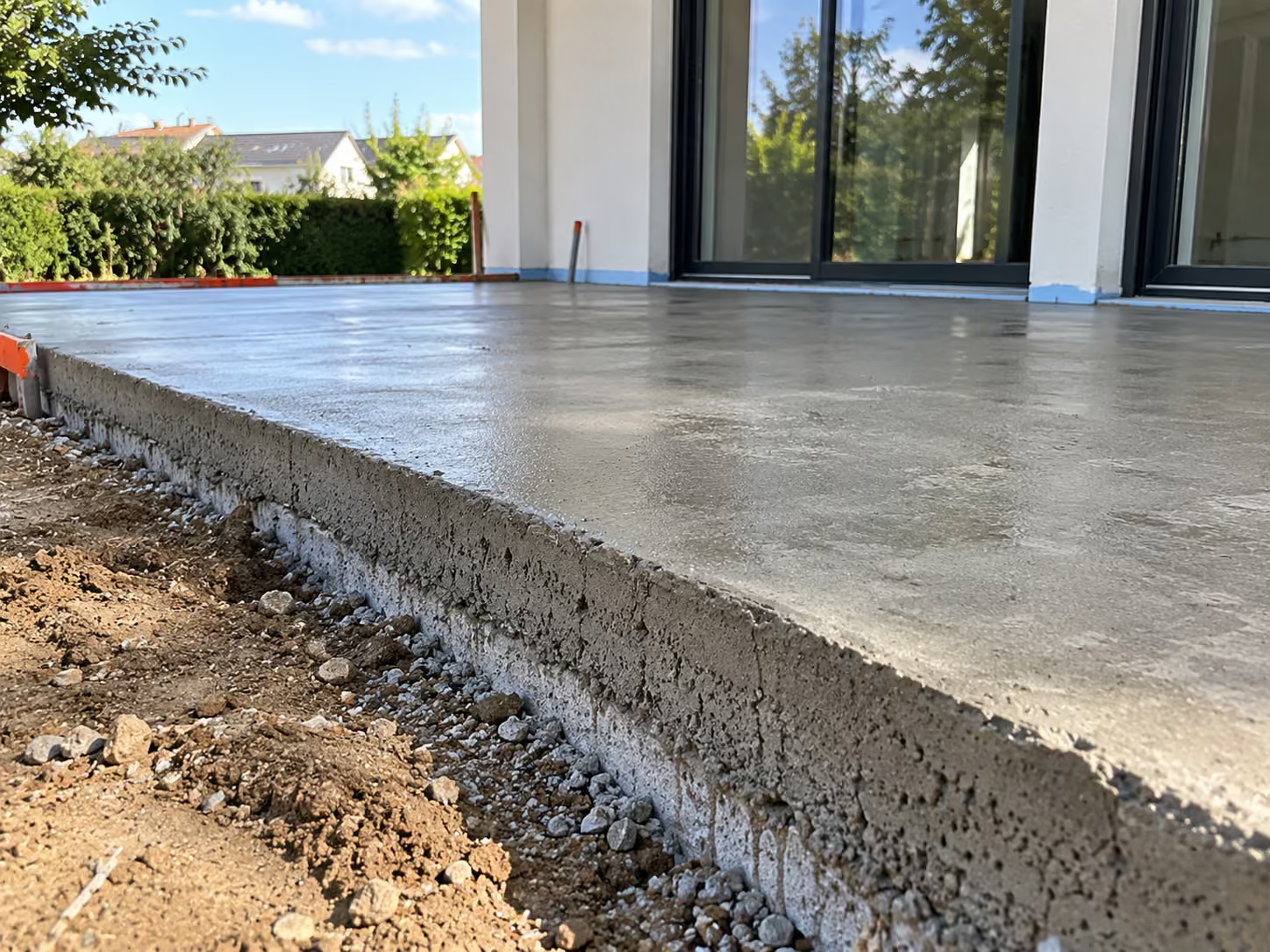
Polyurethane foam offers the best thermal performance for a minimum thickness. With only 3 cm of PUR + 5 cm of screed, you get efficient insulation while limiting the height to 8 cm.
2. Anhydrite fluid screed (3 cm minimum)
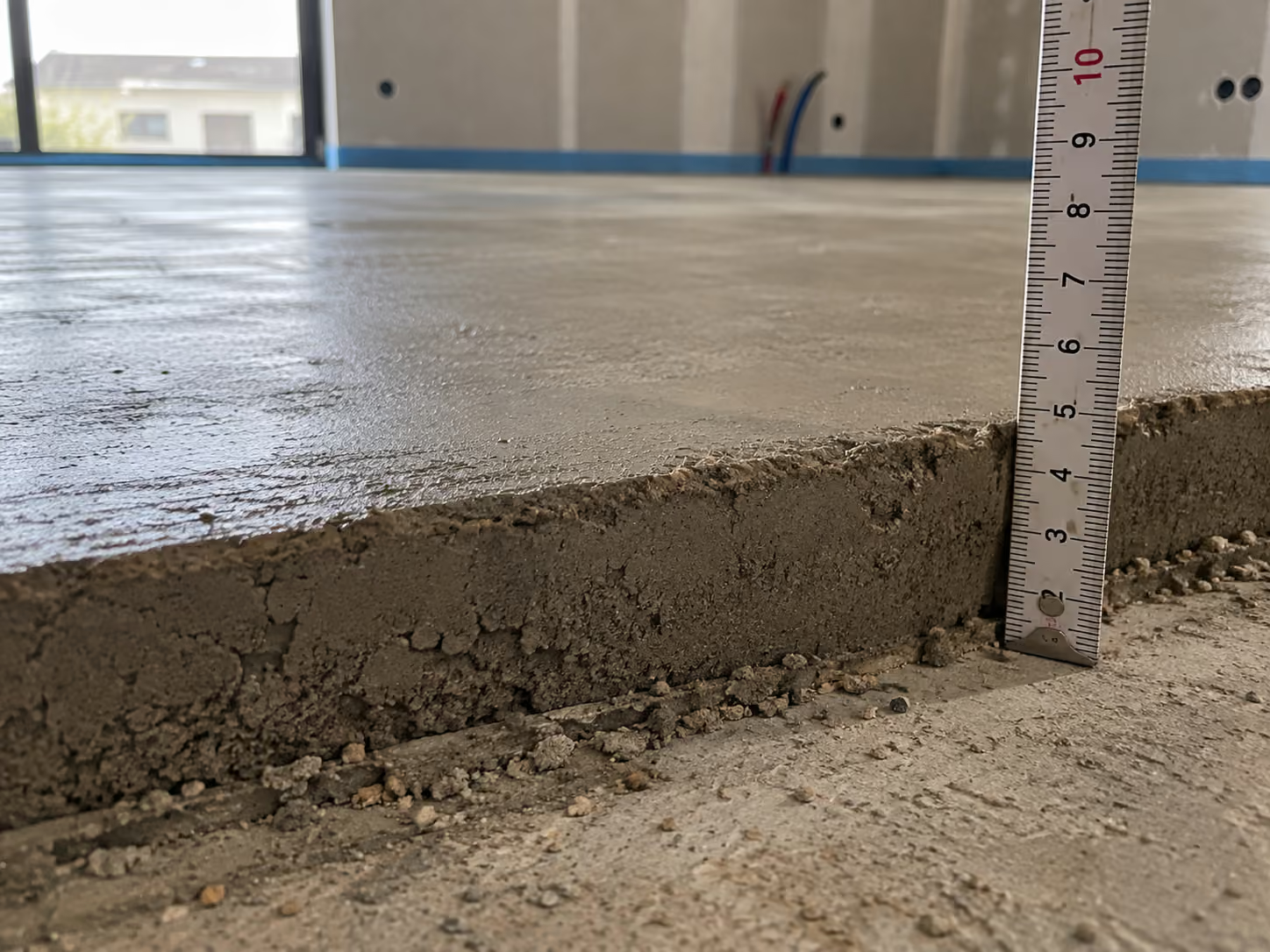
Anhydrite screed allows you to install a screed only 3 cm thick above a heated floor, compared to 5 to 7 cm for a traditional screed. This is a valuable gain in constrained projects.
3. Fine acoustic underlays
For sound insulation, solutions such as Plastifoam (4+2 mm) Or theEthafoam (5 mm) allow impact noise to be reduced without taking up space.
La Energy Performance of Buildings (PEB) imposes strict standards in the Brussels-Capital Region:
To meet the EPB requirements, theground floor insulation on the ground floor is essential. The regulation imposes a maximum U value :
👉 This means that a simple screed without insulation is no longer enough. It is imperative to integrate a insulating layer (PUR or EPS) to achieve these performances.
SolutionThickness requiredU value obtainedProjected PUR (λ = 0.025)10 cm0.25 W/m²KEPS in mortar (λ = 0.038)15 cm0.25 W/m²Kprojected PUR (λ = 0.025)8 cm 0.31 W/m²K (renovation)
Davide Chape Council : under new construction in Brussels, we recommend 10 cm of projected PUR under the screed to ensure compliance with EPB standards without compromising on performance.
The Brussels-Capital Region offers Renolution bonuses to encourage thermal insulation, including floors.
Indicative amounts for floor insulation (according to income and category):
Conditions :
👉 example : for 50 m² of PUR insulation under screed (category II), you can recover up to €2,500.
The green loan at a reduced rate (0.5% to 2%) can finance insulation work up to €25,000 without mortgage collateral. An attractive option for homeowners who are renovating.
Brussels imposes logistical constraints that are not found in rural areas:
Chez Davide Chape, we manage these constraints by:
Brussels projects often involve several stakeholders (architect, general contractor, electrician, heating engineer). Good coordination is essential for:
Living in the city means proximity to neighbors, shops, transport. Noise pollution are one of the main sources of discomfort in Brussels housing.
One poor acoustic insulation between floors may result in:
The standard NBN S01-400-1 imposes acoustic insulation requirements between homes:
👉 Answer: Davide Chape : with our underlay Insulit Bi+9 (Delta Lw of 30 dB on bare slab), combined with a 6 cm floating screed, you easily achieve the required performance.
Working in Brussels requires deal with the constraints of the existing building, regional regulatory requirements and the city's logistical challenges. Each project is unique and requires a tailor-made analysis :
Chez Davide Chape, we know perfectly well the specificities of Brussels. From our base in Ternat, we operate daily throughout the Brussels-Capital Region. Our team masters access constraints, local PEB requirements and the expectations of architects and contractors working on urban projects.

Do not hesitate to contact us directly: our team is always available to assist you and provide a 100% free quote.


Your expert in screeds, thermal insulation, and acoustic floor insulation.