Sound insulation under screed: is it useful?

Clear comparison between screed alone, thermal insulation and acoustic solution.
Noise is one of the first sources of discomfort in a home. Footsteps, shocks, resonance... However, theacoustic insulation under screed is still often overlooked or misunderstood.

Do we really need to provide an acoustic solution?
One screed only is it enough?
THEthermal insulation under screed does it also improve acoustics?

In this article, we compare 3 common solutions to help you make a choice adapted to your project.

What types of noises can you reduce under a screed?

Before comparing solutions, it is important to distinguish the types of noise pollution concerned.

Under a screed, we mainly act on:

  • The impact noises (steps, falling objects, movements),
  • the transmission of vibrations to neighboring or inferior rooms.

👉 THEacoustic insulation under screed does not treat airborne noises (voice, music), but rather noises transmitted by the ground.

Option 1: Screed only, without insulation

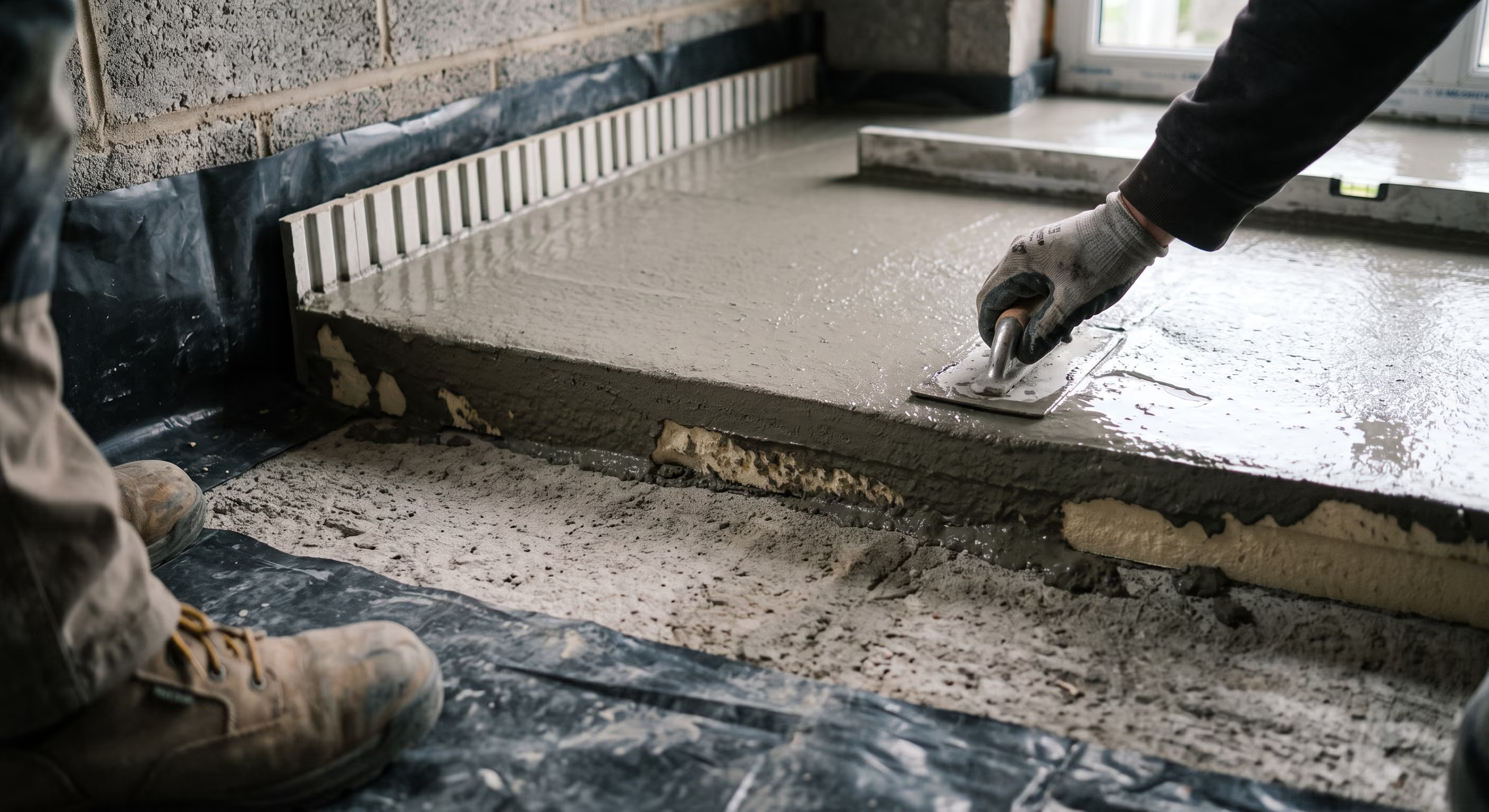
La screed only is placed directly on the slab, without an intermediate layer.

What she does

  • Provides additional mass
  • Improves soil inertia slightly

What she doesn't do

  • Almost does not limit impact noises
  • Transmits vibrations directly to the structure

👉 In terms ofacoustics, a screed alone is not very effective.
It may be suitable for technical rooms or spaces where acoustic comfort is not a priority.

Option 2: Screed with thermal insulation

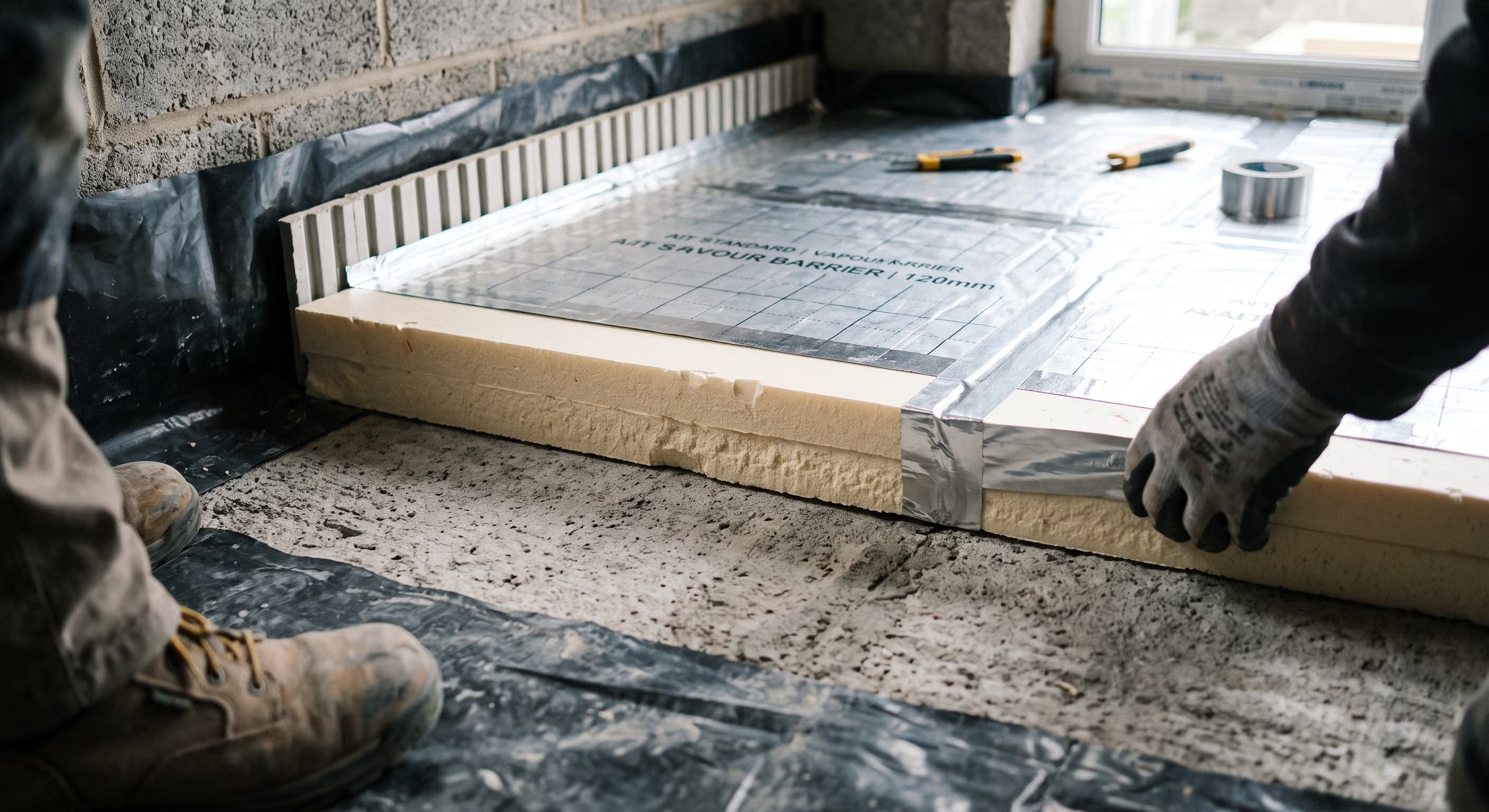
One screed with thermal insulation (PUR or EPS) is primarily designed to limit heat loss. But it also has a side effect on acoustics.

Real acoustic contribution

  • The insulator partially dampens some vibrations
  • Impact noises are slightly attenuated

Limits

  • The main objective remains thermal
  • Sound attenuation is limited and not specific

👉 This solution offers a intermediate acoustic comfort, sufficient in some single-family homes, but often insufficient in apartments or buildings.

Option 3: Screed with dedicated acoustic solution

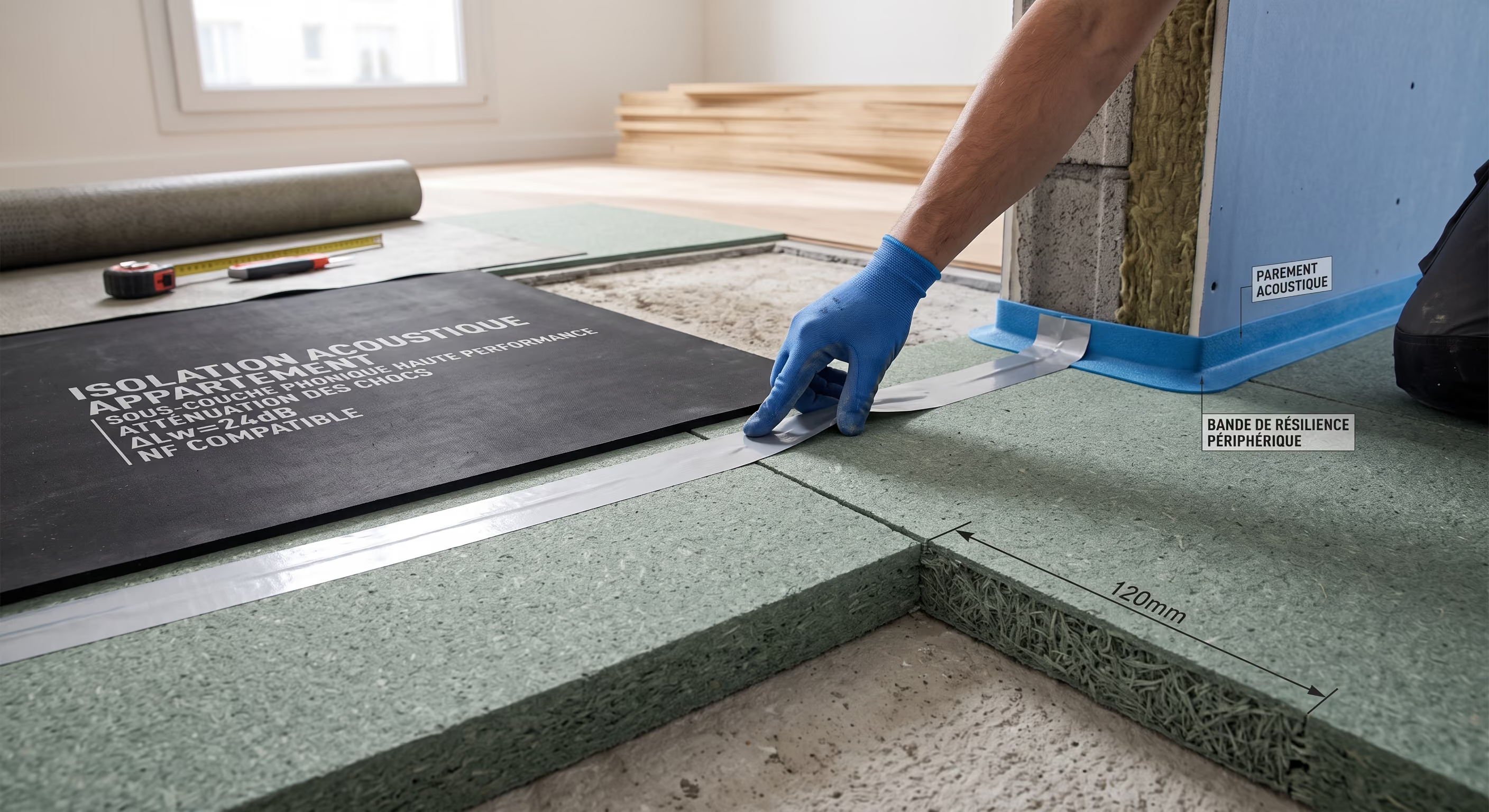
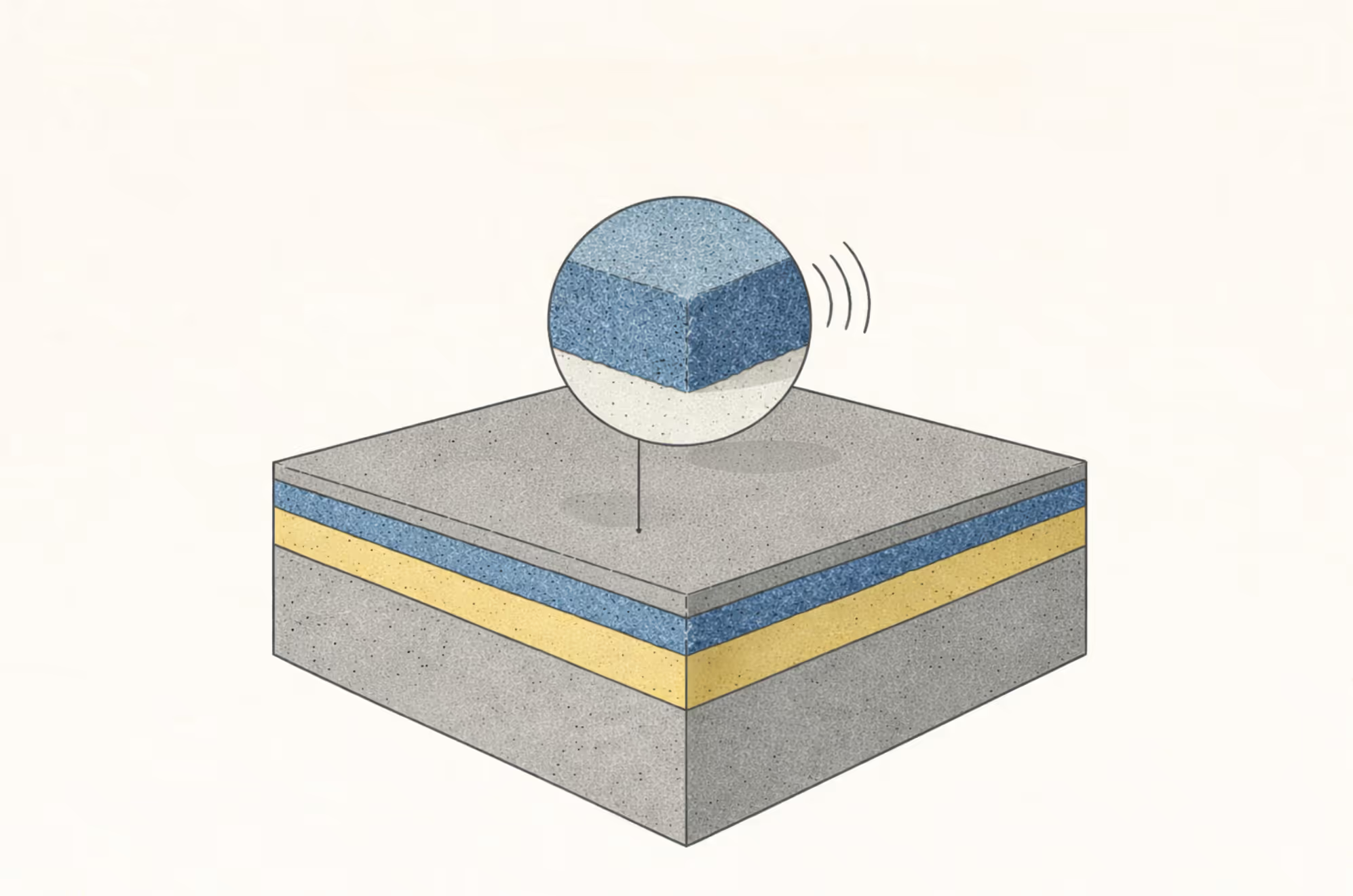
La screed with acoustic insulation is based on a fundamental principle: the uncoupling.

Principle

A specific acoustic layer is placed between the slab and the screed.
The screed is then called buoyant, because it is no longer in direct contact with the structure.

Results

  • Strong reduction in impact noises
  • Limiting the transmission of vibrations
  • Significant improvement in sound comfort

👉 It is the most effective solution foracoustic insulation under screed, especially in collective housing.

Comparative table of the 3 options

Solution Acoustic comfort Recommended use
Screed only Low Technical rooms, low-sensitivity areas
Screed + thermal insulation Medium Single-family homes, standard comfort
Screed + acoustic solution High Apartments, upper floors, acoustic requirements

In what cases is sound insulation under screed really useful?

One acoustic insulation under screed is highly recommended when:

  • the housing has several levels,
  • it is an apartment or a building,
  • Footsteps are a source of discomfort,
  • The project aims at a high level of comfort,
  • acoustic requirements are imposed (renovation or new construction).

In these situations, a screed without an acoustic solution quickly becomes insufficient.

Can thermal and acoustic insulation be combined under screed?

Yes.
Some configurations allow you to combining thermal insulation and acoustic insulation, provided that:

  • the materials are compatible,
  • the total thickness be controlled,
  • the screed is adapted to the configuration.

It is an interesting solution to combine thermal comfort and sound comfort, without compromise.

Common mistakes in acoustic insulation under screed

  • Thinking that a heavy screed is enough to isolate noise
  • Confusing thermal and acoustic insulation
  • Neglecting peripheral connections (acoustic bridges)
  • Choosing a solution without analyzing the type of noise to be treated

One poor acoustic design is difficult to correct after installing the screed.

Conclusion: acoustics, a comfort that is especially appreciated after the fact

THEacoustic insulation under screed is not always essential, but it becomes essential as soon as sound comfort is an issue.

  • La screed only offers very limited acoustic comfort
  • La screed with thermal insulation slightly improves the situation
  • La screed with dedicated acoustic solution provides real lasting comfort

Chez Davide Chape, each project is analyzed according to the use of the rooms, the structure of the building and the expectations in terms of comfort. This approach makes it possible to propose a coherent acoustic solution, without unnecessary oversizing. Contact us now to get a quote.

Davide Chape logo icon representing the corporate identity.
FAQS

Frequently Asked Questions

Do not hesitate to contact us directly: our team is always available to assist you and provide a 100% free quote.

Illustration of a working worker - Davide Chape
Question black icon
Is a screed enough to reduce footfall noise?
+ icon
Question black icon
Does thermal insulation improve acoustics?
+ icon
Question black icon
Is acoustic insulation under screed mandatory?
+ icon
Question black icon
Can acoustic insulation be added after screed?
+ icon
Question black icon
Are acoustic insulation and floor heating compatible?
+ icon

Do you need a reliable partner for your solid screeds, thermal or acoustic insulation?

Contact us
Arrow right icon