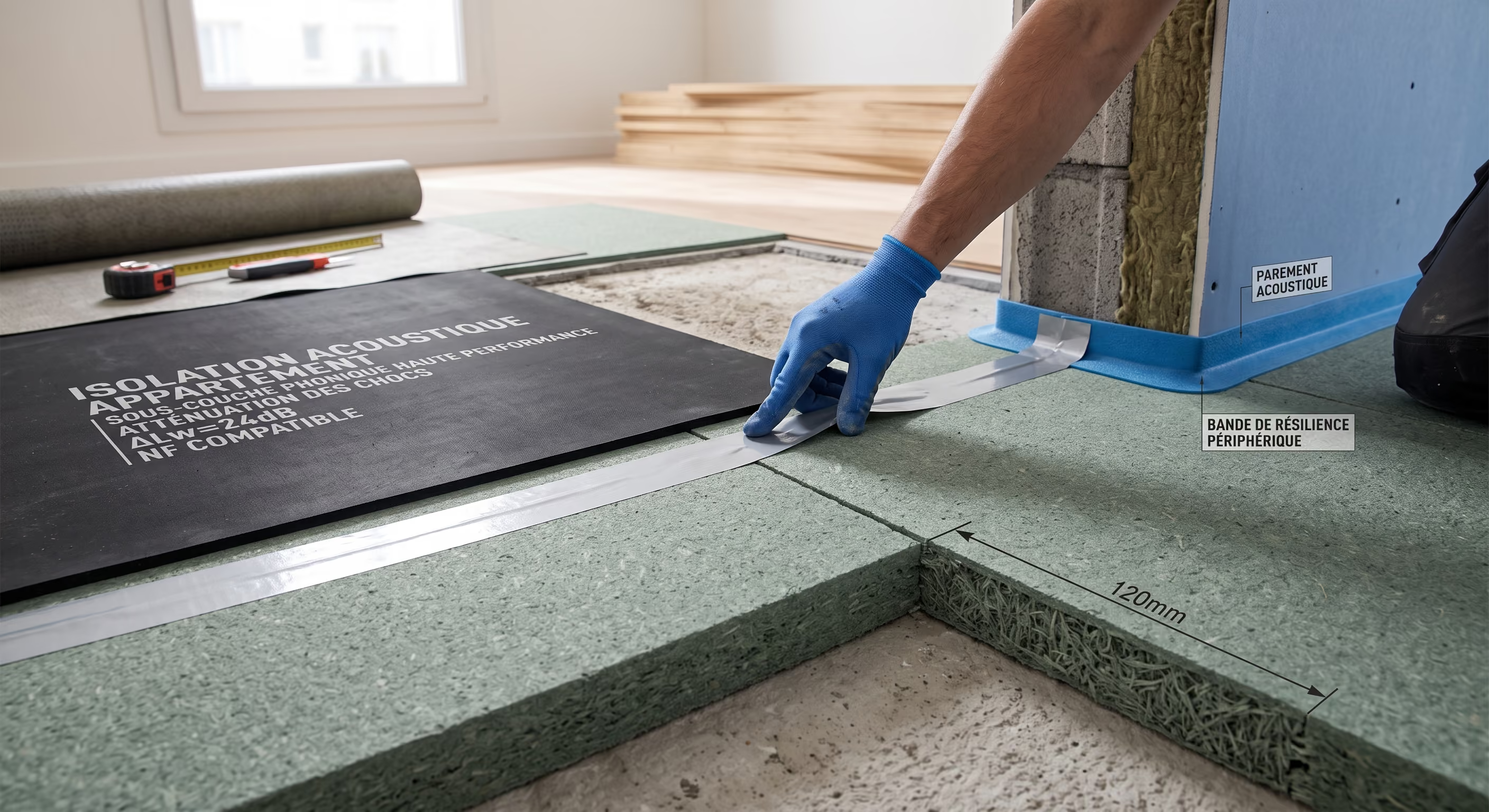
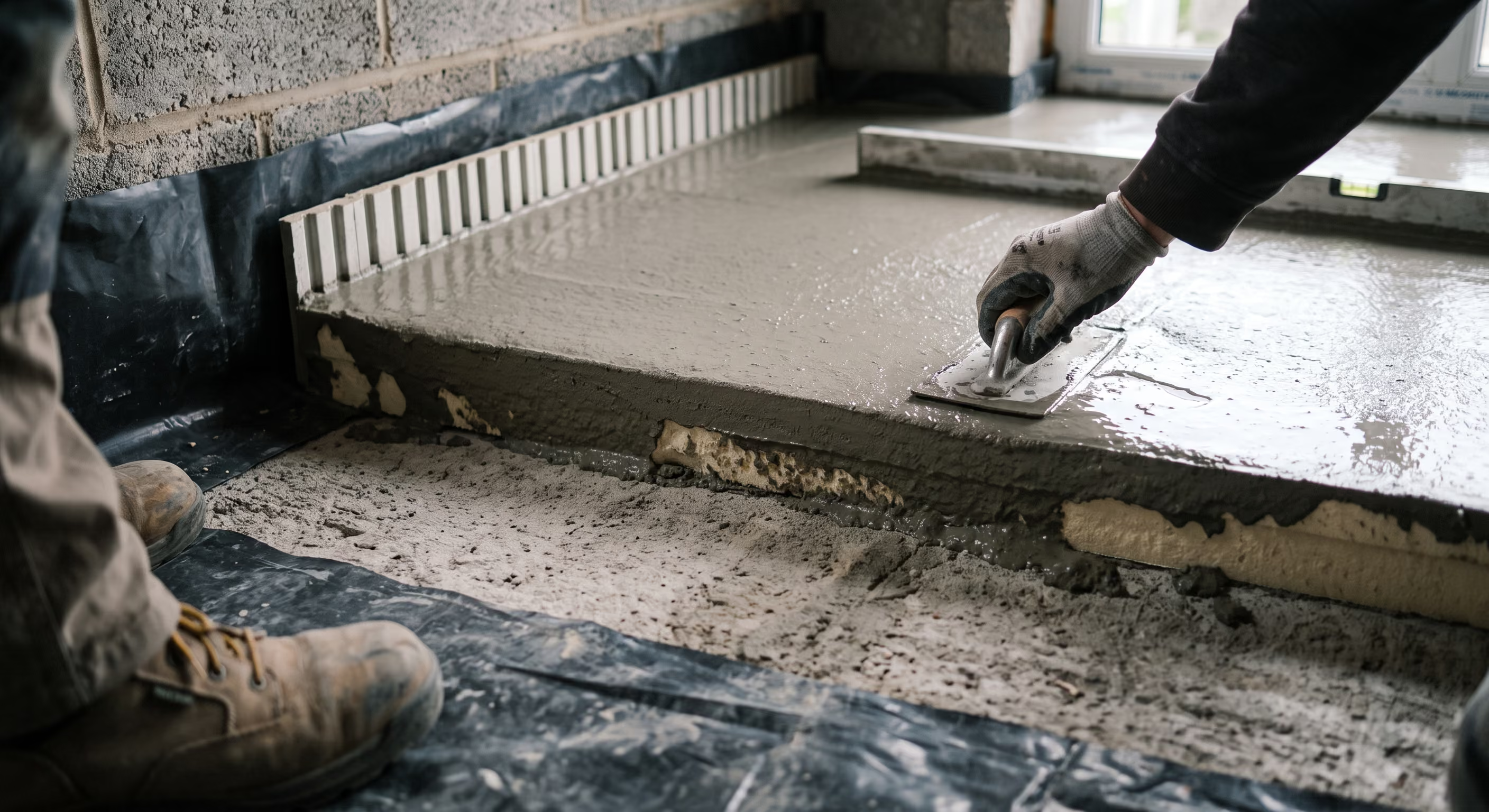
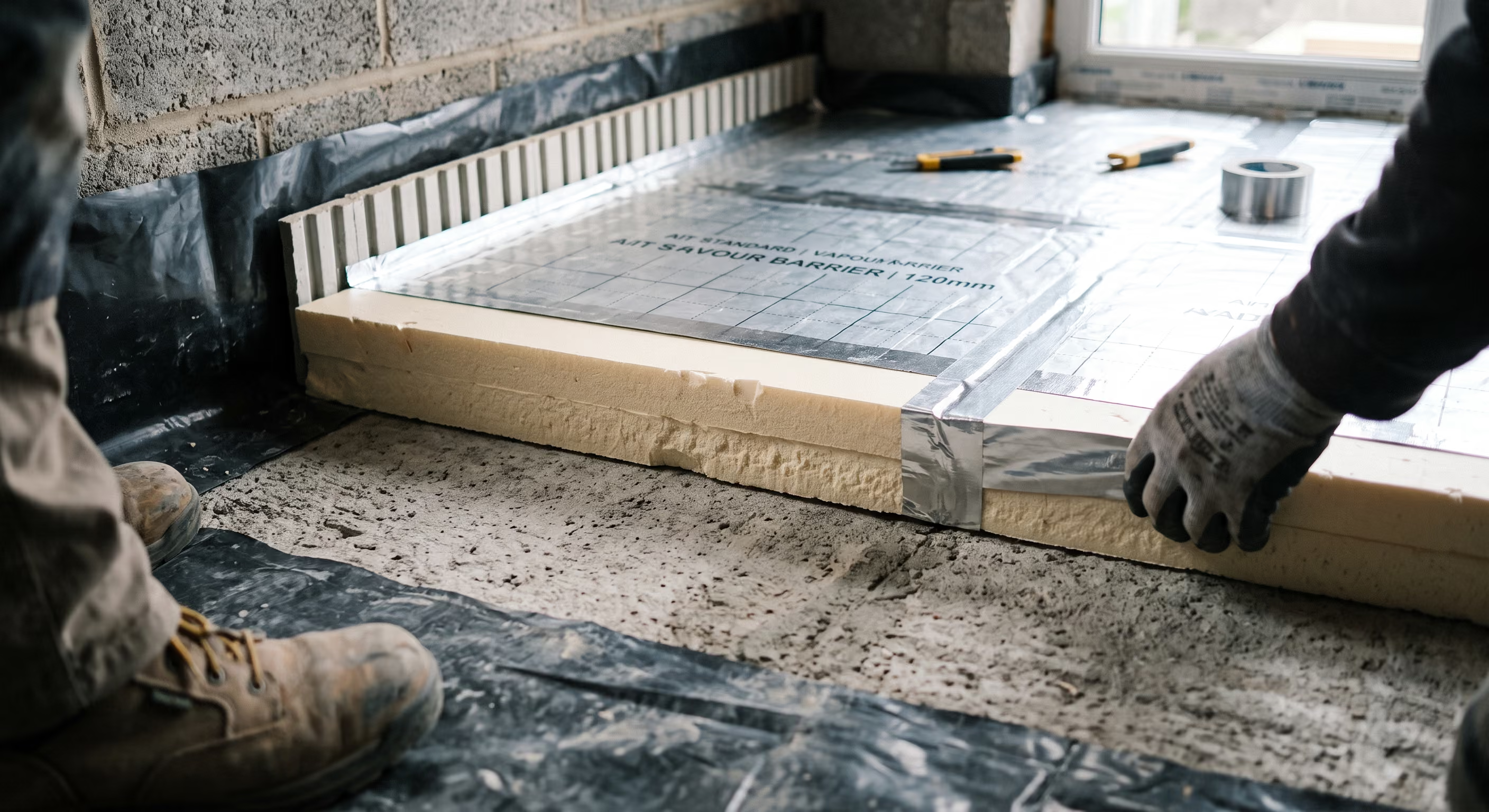
Clear comparison of the two thermal insulations to choose the most suitable solution for your project.
Choose one thermal insulation under screed is not a technical detail. It is a decision that directly impacts the thermal comfort, the energy performances of the building and the efficiency of heating, especially when a underfloor heating is planned.
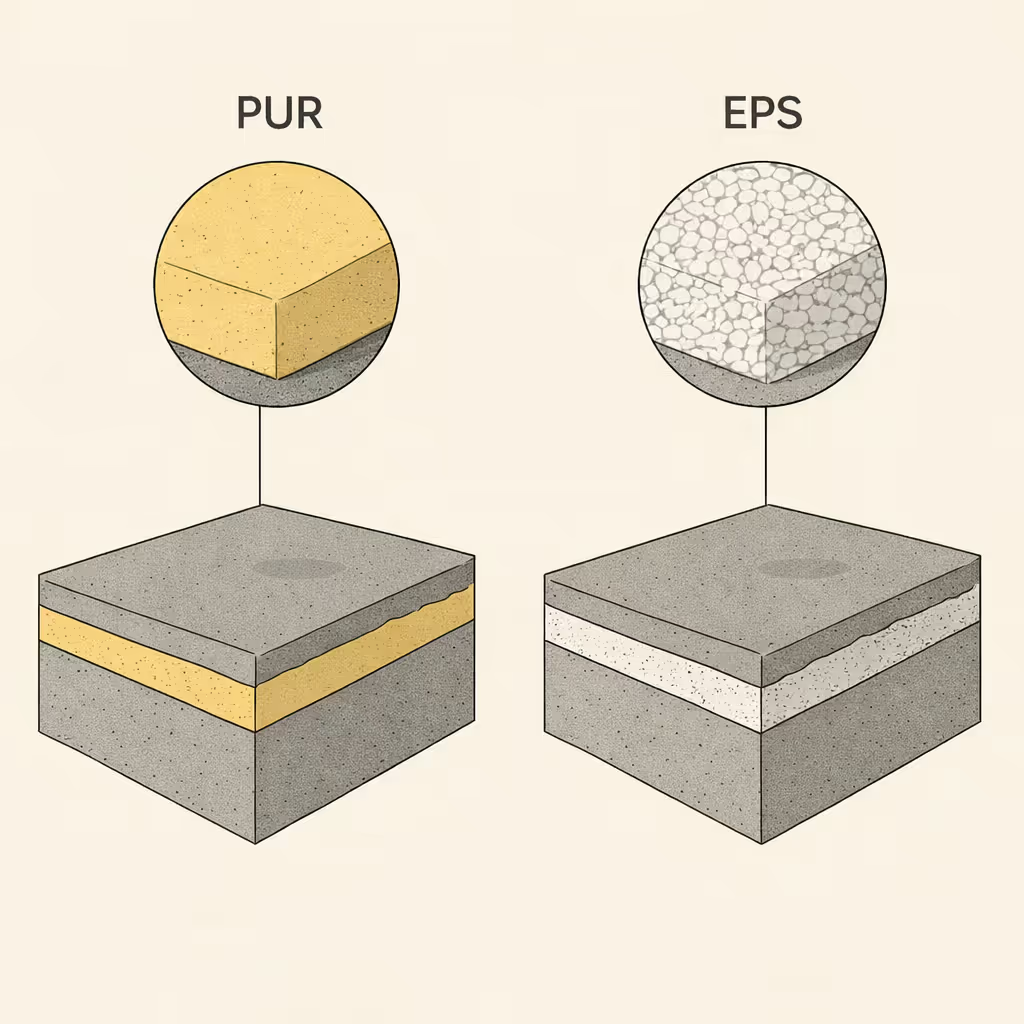
Among the most used solutions in Belgium, two options are always used: polyurethane foam (PUR) projected and the EPS pellets.
Although their objective is the same (to limit heat loss), their operation, their implementation and their performances differ greatly.
In this article, we compare PUR vs EPS under screed to help you choose the most suitable solution for your project.
The screed is not insulating in itself. Sans thermal insulation under screed, a large part of the heat produced escapes downwards, in particular on a full slab or on a ventilated vacuum.
Good insulation allows:
The choice of insulating material is therefore strategic.
La polyurethane foam (PUR) is projected directly onto the slab in liquid form. It expands rapidly, hardens and forms a continuous, seamless insulating layer.
Main characteristics:
La PUR under screed is widely used in renovation, when the available height is limited.
THEEPS under screed consists of expanded polystyrene beads mixed with a binder. The mixture is spread and then leveled before installing the screed.
Main characteristics:
Les EPS pellets are often used when you want to catch up on levels or fill in volumes.
La Projected PUR offers superior thermal performance with equal thickness. It makes it possible to achieve a high level of insulation with fewer centimeters, which is a major advantage in renovation.
THEEPS under screed insulates properly, but generally requires a greater thickness to obtain an equivalent result.
👉 Advantage: PURE
👉 Advantage: PURE
THEEPS pellets adapts very well to irregular supports. It makes it possible to make up for differences in level before screed.
La Projected PUR fits the existing surface perfectly, but requires a clean and well-prepared support.
👉 Advantage: PES on complex supports
La Projected PUR is extremely quick to install. Once hardened, the screed can be quickly installed.
Les EPS pellets require more time to set up and stabilize before screed.
👉 Advantage: PURE
Both solutions are compatible with a underfloor heating, but the PUR under screed allows better heat transmission to the top thanks to its more efficient insulation.
👉 Advantage: PURE
La polyurethane foam (PUR) is particularly recommended if:
It is a very efficient solution, provided it is implemented by an experienced professional.
Les EPS pellets are a good option if:
They provide reliable insulation, provided that the implementation is thorough.
One poorly selected or improperly installed screed insulation may cancel out a large part of its profits.
There is no one-size-fits-all solution.
La PUR projected under screed offers superior thermal performance and great efficiency on constrained construction sites.
Les EPS pellets remain a relevant alternative in specific configurations, especially when adaptation to the support is a priority.
Chez Davide Chape, each project is analyzed individually: existing support, available height, use of the building and type of heating. This approach makes it possible to choose the better thermal insulation under screed, without compromising on durability or comfort. Contact us now to get a quote.

Do not hesitate to contact us directly: our team is always available to assist you and provide a 100% free quote.


Your expert in screeds, thermal insulation, and acoustic floor insulation.