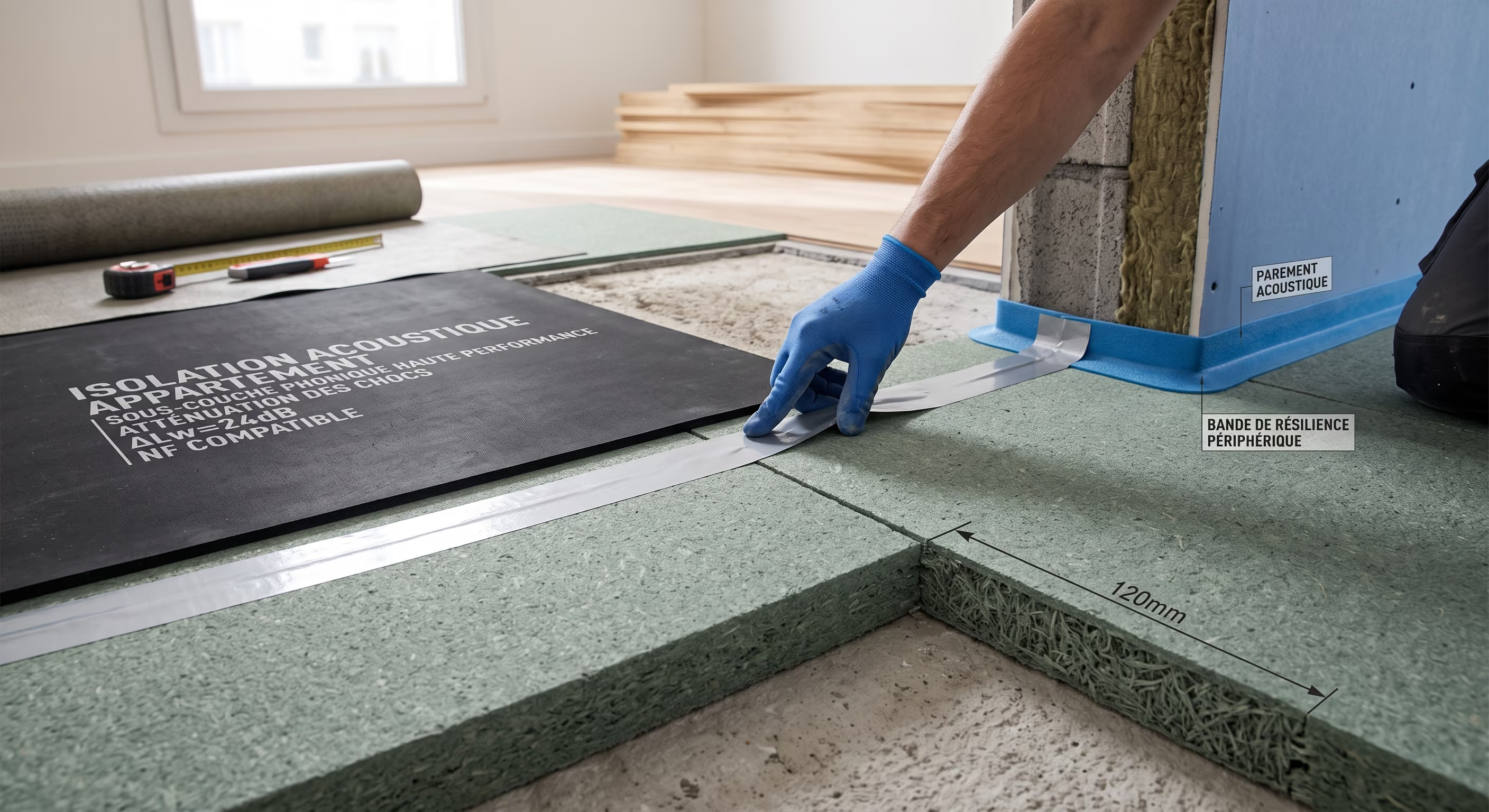
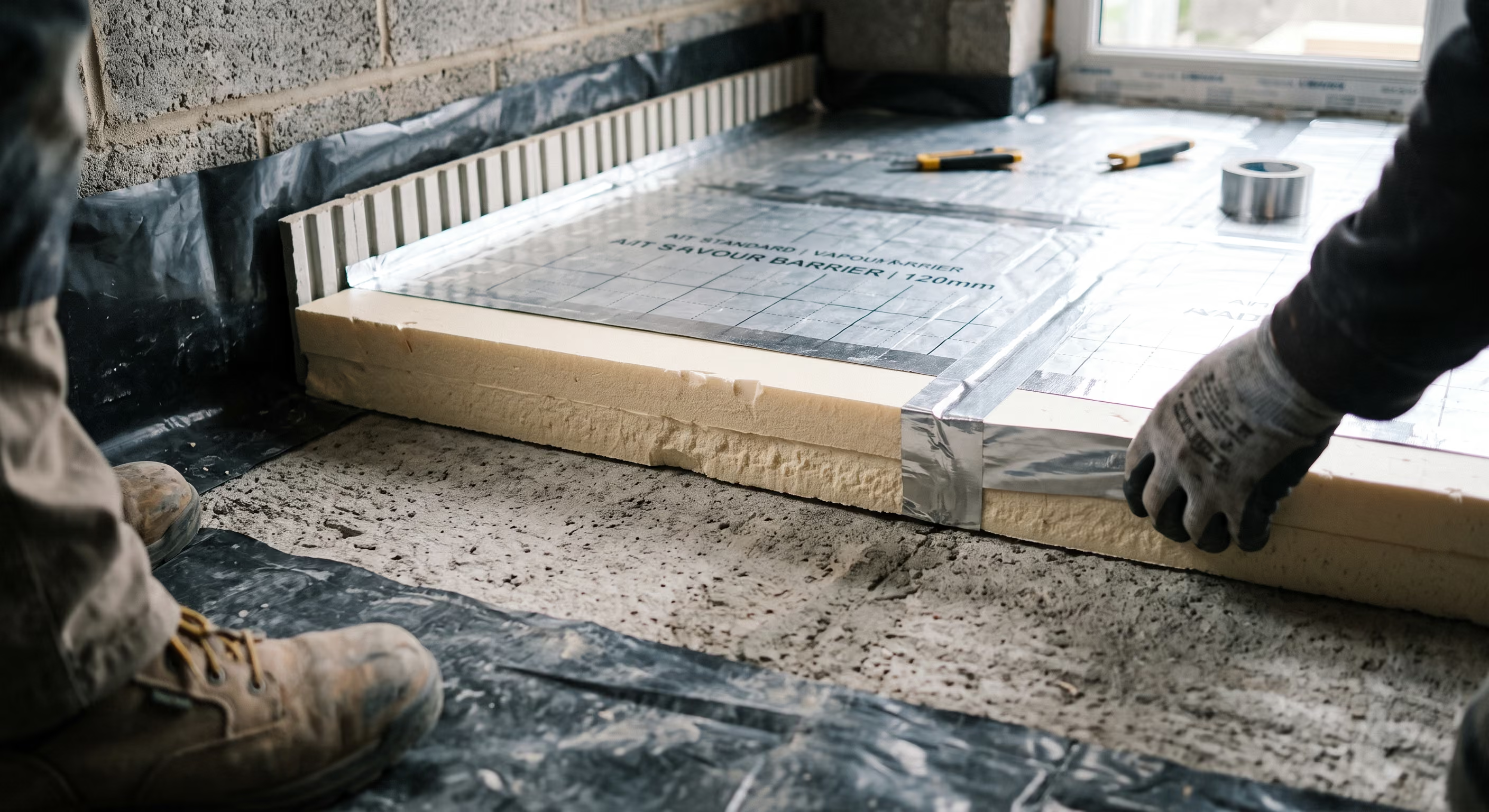
Discover the differences between traditional screed and anhydrite fluid screed. Compare their advantages, limitations and costs to choose the ideal solution for your project.
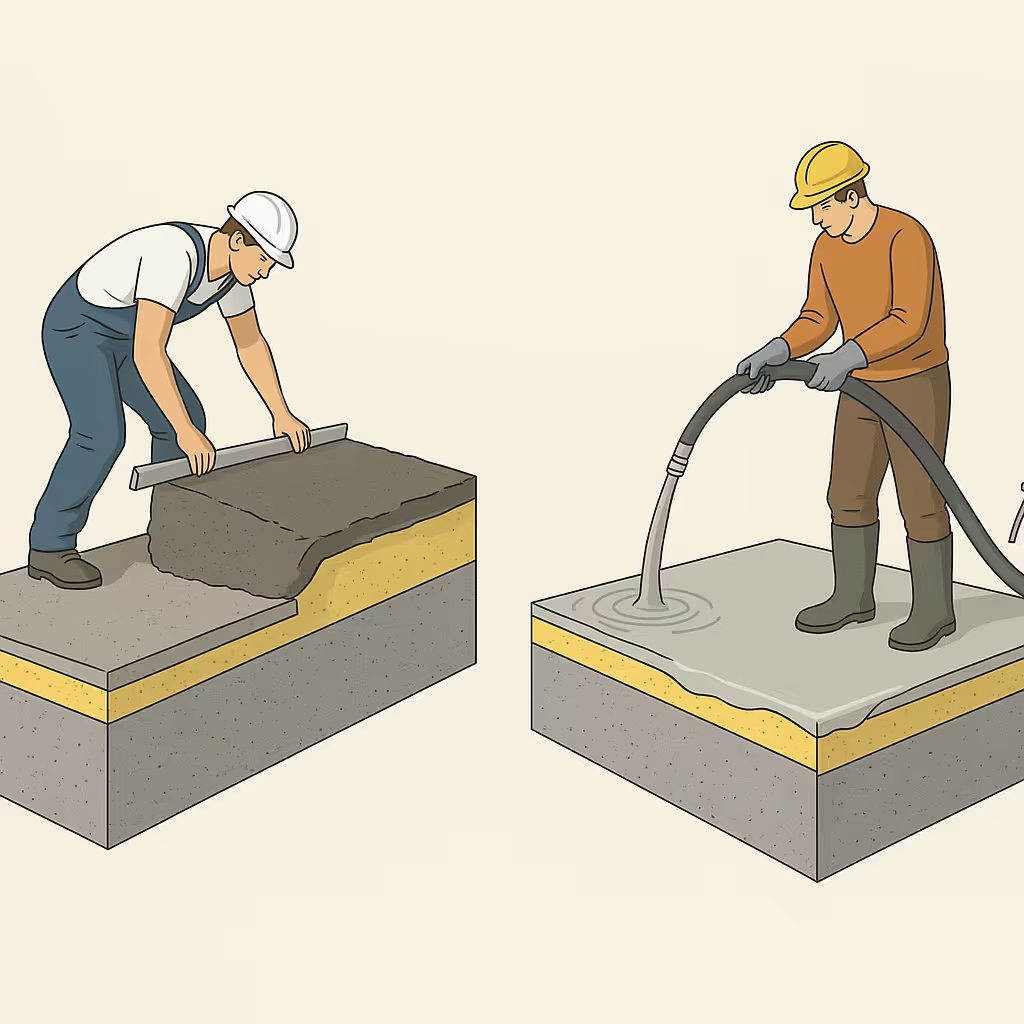
Choosing a screed is nothing trivial. It influences the flatness, the sustainably, the final rendering, the thermal performance and even the everyday comfort. In Brussels and everywhere in Belgium, the two most common solutions are traditional cement screed And the anhydrite fluid screed.
However, they meet very different needs. Let's dive into their characteristics, advantages and limitations to understand which is the most suitable for your project.
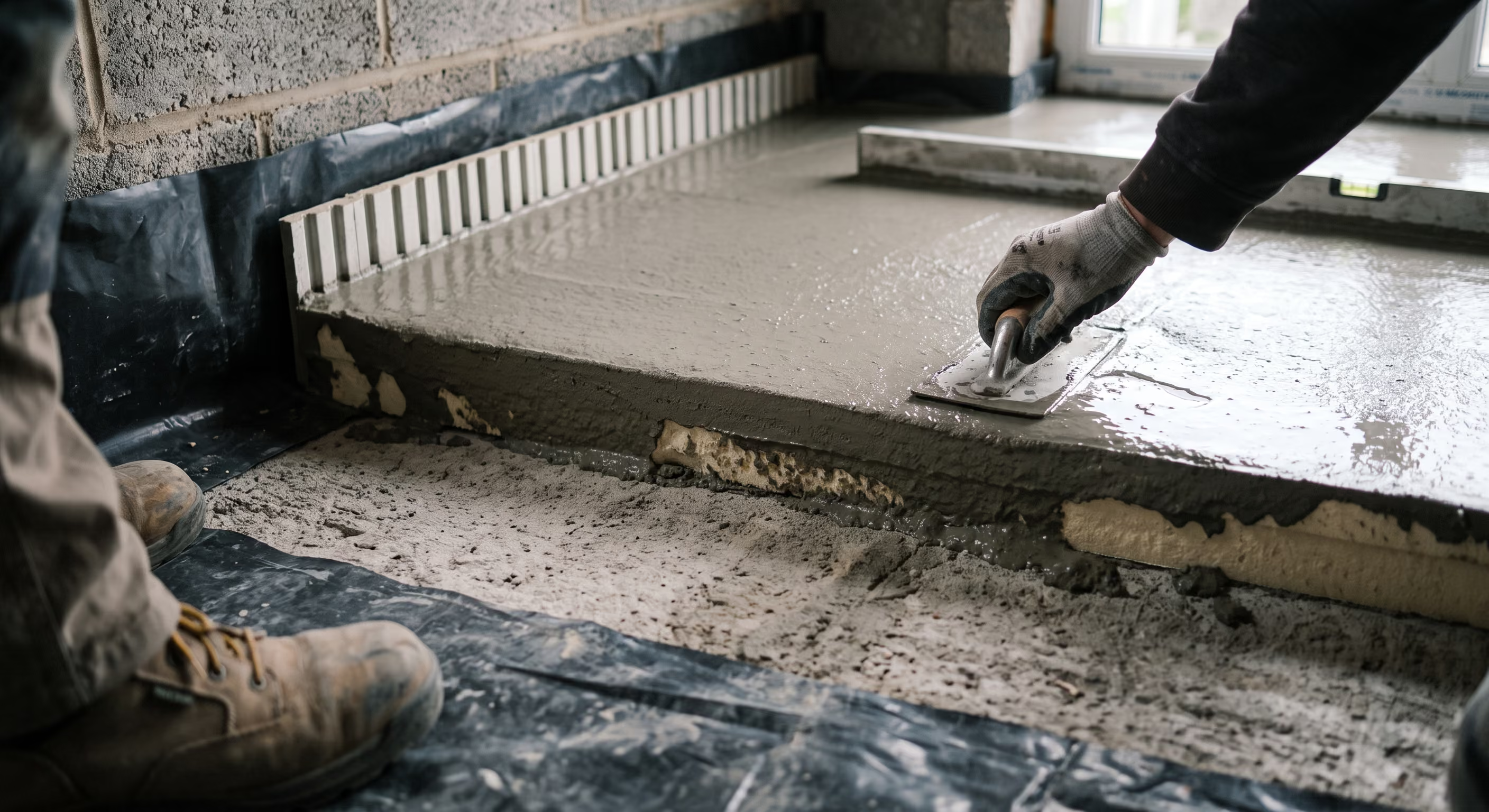
Traditional screed is a mixture cement + sand + water. Placed manually, it is pulled with a ruler and floated to level the ground.
Its strengths:
She follows the DTU 26.2 and generally presents a 5 to 7 cm thick, sometimes more depending on the constraints.
Anhydrite fluid screed (based on > 90% calcium sulphate) is a screed self-levelling, applied by pumping. It is set up by Casting, without manual smoothing, which guarantees almost perfect flatness.
Its major characteristics:
It is governed by the standard NF IN 13813 (minimum class C20-F4).
To remember : if your renovation requires a low available height, anhydrite fluid screed is often the best compromise.
This is one of the points that clearly tip the balance.
To gain thermal comfort and reduce consumption, anhydrite is often the reference.
lookout : a 5 cm anhydrite screed can require up to 6 to 8 weeks of drying.
This is a key point if you are constrained by deadlines.
For large open spaces — living rooms, lofts, floors — the fluid screed remains unbeatable in terms of visual continuity.
The anhydrite screed forms a Militance on the surface.
She must be sanded and Aspirated before installing tiles, parquet or vinyl.
An oversight may result in a detachment of the coating.
Traditional screed, on the other hand, does not require this systematic treatment.
The traditional screed remains a solid solution for the majority of projects. Its cement-sand composition gives it a high mechanical strength, making it an excellent choice for garages, wet rooms, utility rooms, or even some outdoor uses. It supports loads very well and naturally resists humidity.
Its other advantage is its speed of recovery : even if it takes a few days before being able to drive on it, it often allows tiling to be installed earlier than anhydrite, which can accelerate the progress of the site.
On the other hand, its implementation is more manual and therefore more demanding: obtaining perfect flatness depends heavily on the know-how of the team, and the minimum thickness, generally 5 to 7 cm, can limit some renovation projects.
On the budget side, it remains a competitive option, with an average price between 20 and 35 €/m², equipment and installation included.
The anhydrite fluid screed is especially distinguished by its self-leveling, which makes it possible to obtain a perfectly flat floor without manual smoothing. It is an ideal solution for large surfaces, large format tiles or any project where the finish must be flawless.
It is also particularly efficient on hydraulic heated floors, thanks to its ability to perfectly coat pipes and to transmit heat more quickly than a cement screed. This improves comfort and can reduce energy consumption.
On the other hand, anhydrite imposes some constraints: a longer drying time before installing the coating, the obligation to sand off the milt, and a sensitivity to humidity which makes it unsuitable for bathrooms, garages or exposed rooms.
Its cost generally varies between 22 and 50 €/m², slightly higher on small areas, but very profitable on large rooms thanks to rapid implementation.
The traditional screed is a robust and versatile solution, ideal for humid environments or when deadlines are tight.
The anhydrite fluid screed offers incomparable flatness and superior thermal performance, but requires more rigor in drying.
If you are still hesitating between the two, feel free to ask for a technical opinion : each site has its own specificities (support, available height, coating, underfloor heating) and a precise diagnosis makes it possible to avoid choice errors from the start. At Davide Chape, we simply analyze your situation and guide you to the most appropriate solution, without additional costs or commitments.

Do not hesitate to contact us directly: our team is always available to assist you and provide a 100% free quote.


Your expert in screeds, thermal insulation, and acoustic floor insulation.