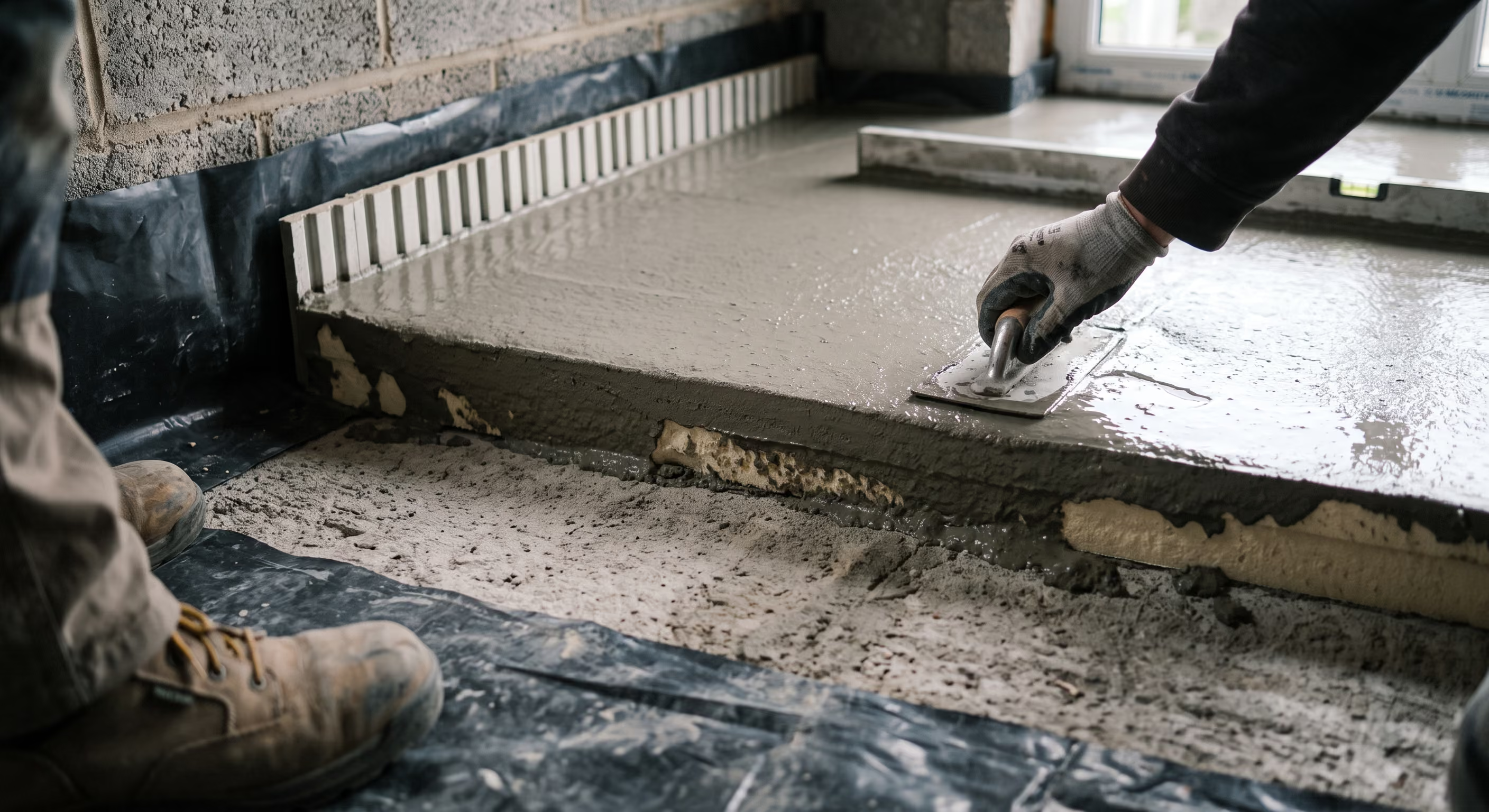
Before pouring a screed, a few omissions can ruin everything on your construction site in Brussels or Belgium. This article details the most frequent mistakes and the essential checks to ensure a solid, well-smoothed screed that is ready for tiling or parquet.
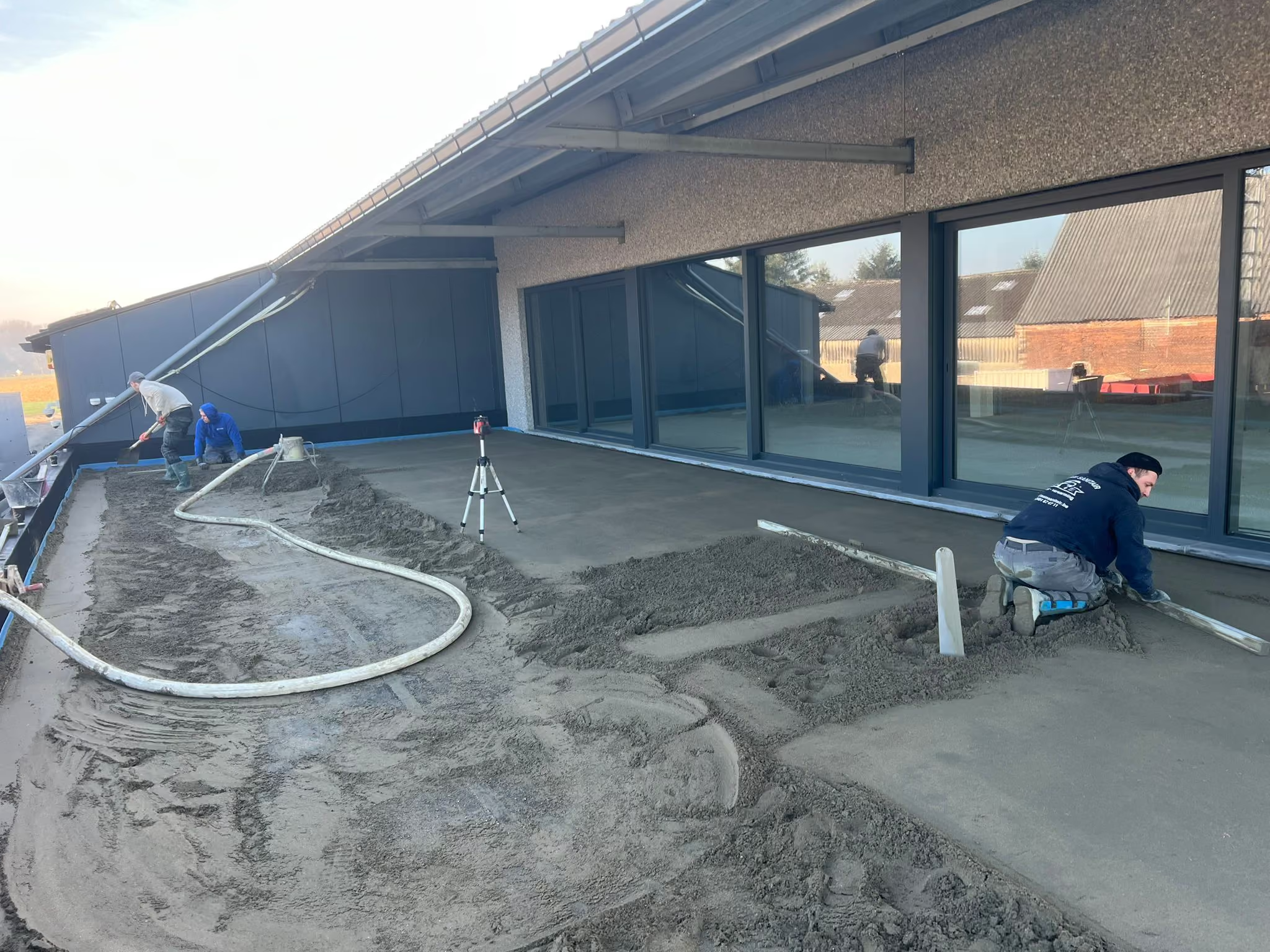
Pouring a screed seems simple, but several issues can quickly become bottlenecks on a construction site in Brussels or Belgium. Poor preparation leads to cracks, uneven surfaces, moisture problems, or difficulties in laying tiles or parquet flooring. Here are the most common mistakes to avoid before pouring a screed, with practical advice for individuals and professionals.
Many construction sites start directly by mixing the screed, without ensuring the slab is truly ready. A poorly cleaned, greasy, oily, or overly damp substrate prevents proper adhesion and weakens the entire screed. Ensure the slab is dry, clean, dust-free, grease-free, and free of formwork residues. For old concrete, remove friable parts and detached coatings, then roughly smooth out any irregularities.
In renovations in Belgium, an unstable substrate can also lead to movements combined with insulation and underfloor heating, which increases the risk of cracks or delamination.
Also, avoid skipping the adhesion primer when the manufacturer recommends it. A primer reduces substrate porosity, improves adhesion, and prevents the formation of bubbles or delamination. For renovations in Brussels apartments, where slabs are often old, a well-applied primer limits the risk of superficial cracks and blistering after the underfloor heating is put into service.
If you're unsure about the type of primer (reinforced, epoxy, latex), ask for advice from a material supplier who regularly works with screed layers in Brussels.
Another common mistake is pouring a screed without planning for reinforcement or shrinkage joints. Without reinforcement (polypropylene fiber or mesh), the screed is more susceptible to shrinkage cracks, especially over large areas. Shrinkage joints, on the other hand, must be marked out before pouring, depending on the room's dimensions and the type of screed.
In Belgium, construction standards recommend reasonable joint spacing to limit unevenness and degradation over time. Don't leave them until the end of the project; they must be part of the formwork plan.
Also consider the position of partitions. Pouring the screed before erecting load-bearing partitions or solid walls can lead to structural imbalances and load issues. Conversely, pouring after all partitions are in place can limit access to areas needing adjustment and make the leveling work more difficult.
In Brussels buildings, it's often advisable to install non-load-bearing partitions before the screed, ensuring that passages for water and heating inlets are well secured. Discuss this point with your screed layer or project manager to adapt the sequence to the building type.
The humidity of the substrate and ambient air is often overlooked before pouring a screed. A substrate that is too damp or a very cold/cold and humid environment slows down setting and can cause superficial cracks. Conversely, drying too quickly due to a draft or in an overheated room weakens the screed.
Before pouring, always measure the substrate's humidity and ensure that temperature conditions are close to the manufacturer's recommendations (often around 5 to 25°C depending on the formulation). In Belgium, climatic variations can be significant, especially in buildings that are not yet heated.
In older buildings in Brussels, ventilation is often limited. Ensure good air circulation after installation, without creating direct drafts on the fresh screed. Poorly calibrated underfloor heating control can cause excessively rapid drying and flat cracks.
Adhere to the drying times indicated by the manufacturer: pouring the screed too quickly before laying parquet or tiles leads to problems and detachment. Always ask for a minimum waiting period for foot traffic, then for the installation of the floor covering.
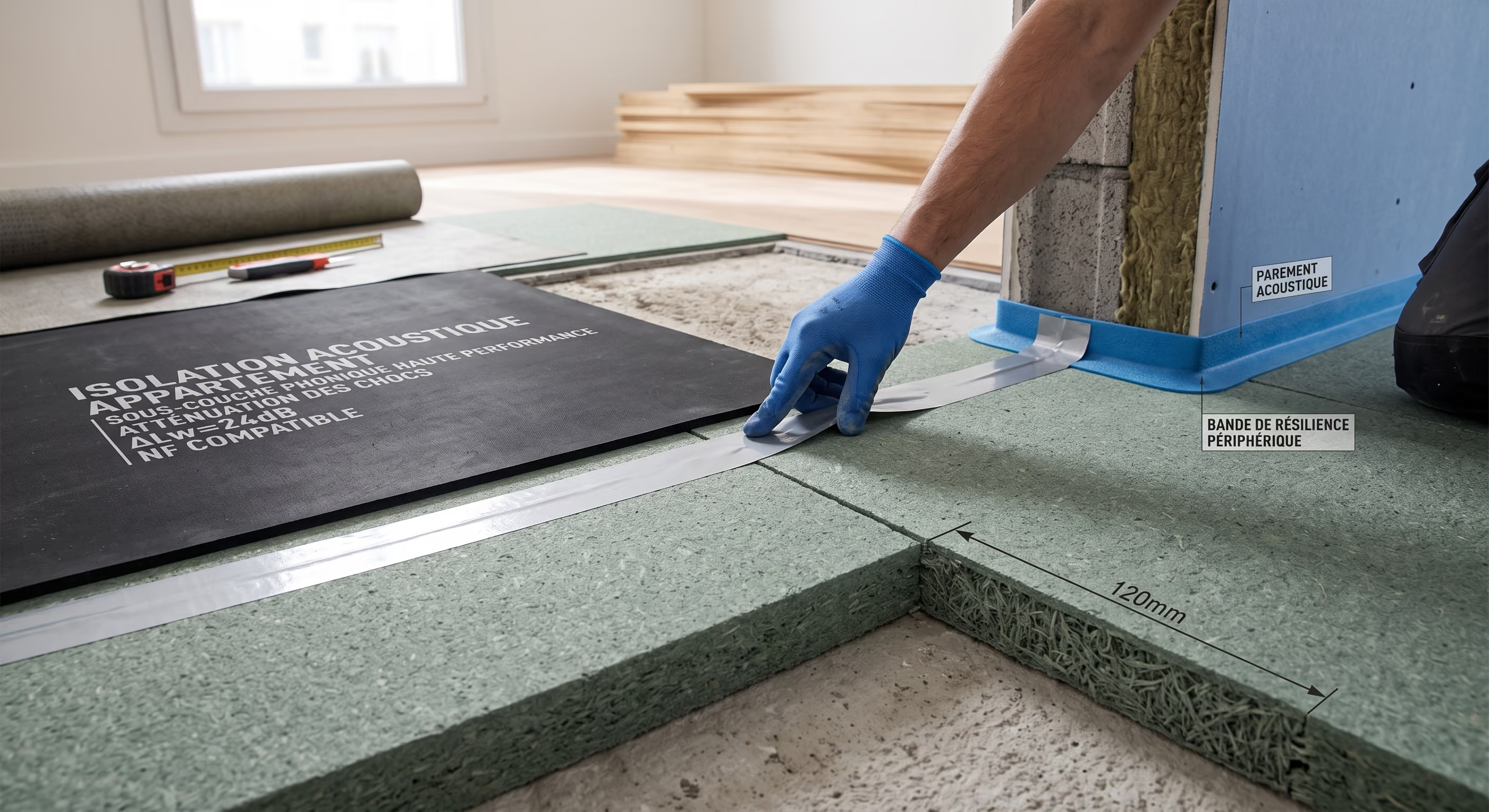
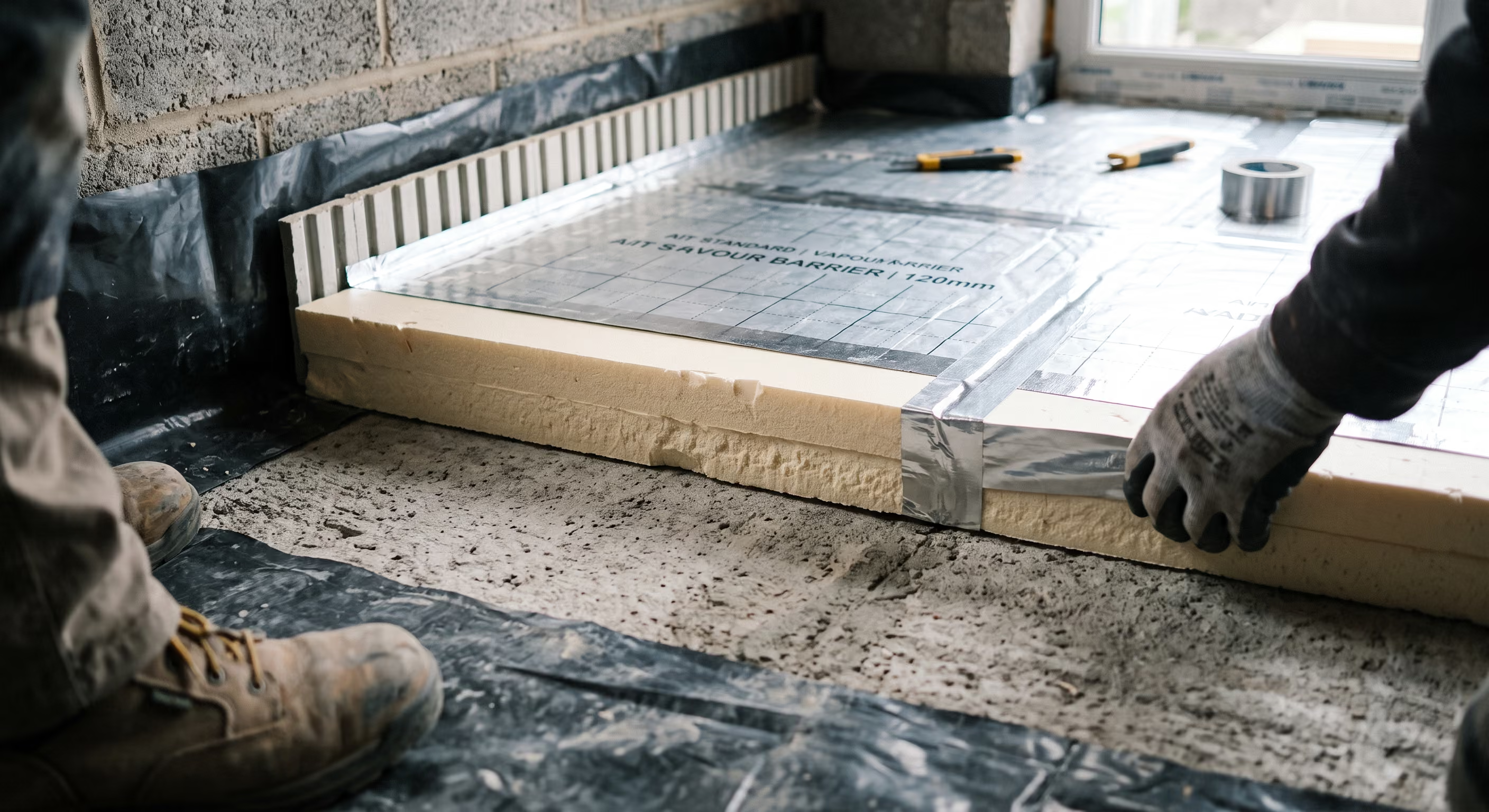
Under-screed insulation and underfloor heating are crucial elements for comfort and energy performance. Rushing these aspects before pouring the screed can lead to energy loss, acoustic issues, or difficulties in installing floor coverings. Ensure that the insulation materials are properly in place, without thermal bridges, and that the underfloor heating pipes are correctly secured and protected.
Older Brussels buildings can conceal thermal irregularities hidden by an uninsulated screed. Under-screed insulation limits downward heat loss and improves heat distribution.
Before pouring the screed, mark the areas where the heating pipes run and secure the control boxes. Rapid screed drying can cause pipes to become uneven and lead to localized thermal discomfort. In renovation projects in Brussels, also check the condition of existing manifolds and their compatibility with the new screed.
In Belgium, energy performance standards strongly encourage under-screed insulation and underfloor heating. A correct installation plan will limit the risk of costly readjustments later on.
Water and electricity inlets and technical conduits are often overlooked before screed installation. However, pouring the screed without checking the position of these conduits quickly leads to subsequent cutting or drilling, causing cracks and damage. Ensure that the conduits are properly secured and that control boxes are correctly positioned.
In renovations of Brussels apartments, conduits can be old or poorly positioned, making remediation more complex. Mark the areas where conduits run and secure the passage points.
In Belgium, drilling work must sometimes comply with electrical safety and piping standards. Pouring the screed before checking the position of inlets can lead to damage to installations and additional costs. A precise conduit plan helps reduce the risk of cuts and damage on site.
Discuss the work sequence with your electrician and plumber to avoid rework.
Davide Chape supports individuals and professionals in Brussels and Belgium with the preparation and installation of their screeds. Our team advises you on the choice of suitable materials (sand, cement, specific products for self-leveling screeds) and offers compatible insulation and underfloor heating solutions.
You receive personalized support for your needs, whether for a small project or a large renovation. If in doubt, we offer technical consultations to help you avoid common mistakes before pouring a screed. Our products are selected to guarantee optimal performance and increased durability.
A construction project in Brussels or Belgium requires meticulous preparation before pouring a screed. Don't hesitate to discuss it with our experts to ensure all aspects are covered and your screed is installed under the best conditions. Benefit from personalized advice for your project and avoid costly mistakes on your site.
▶︎ Contact our experts

Do not hesitate to contact us directly: our team is always available to assist you and provide a 100% free quote.


Your expert in screeds, thermal insulation, and acoustic floor insulation.