Self-leveling compound and screed may look similar on paper, but they don't serve the same purpose. Here's how to distinguish them and choose the right solution for your project in Belgium.
"Self-leveling compound" and "screed" often appear in the same search results, on the same hardware store shelves, and in the same construction site discussions. However, they are not interchangeable solutions, and confusing one with the other can compromise an entire floor.
The distinction can be summed up in one sentence: screed provides structure, self-leveling compound provides the finish. Everything else follows from that.
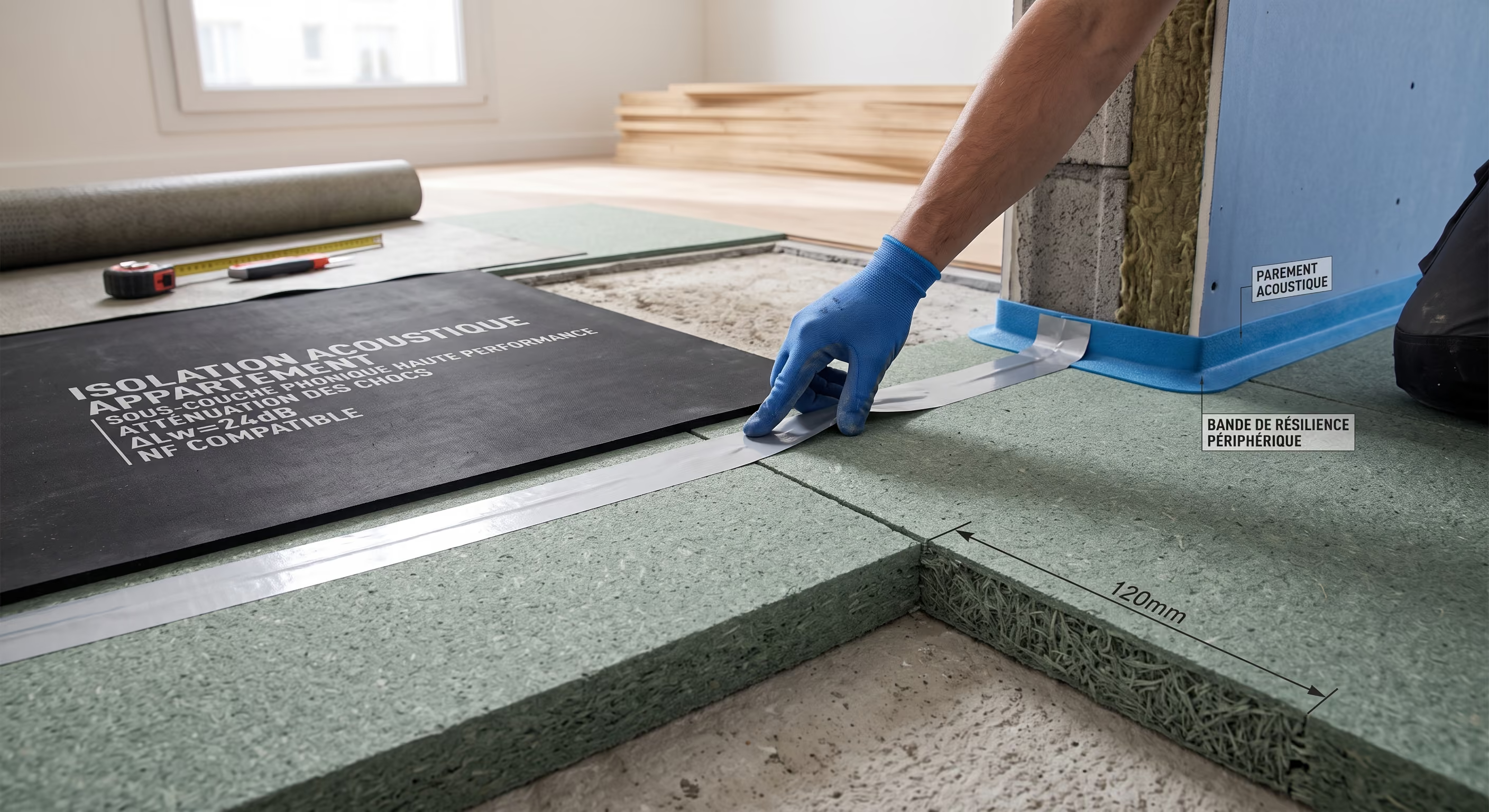
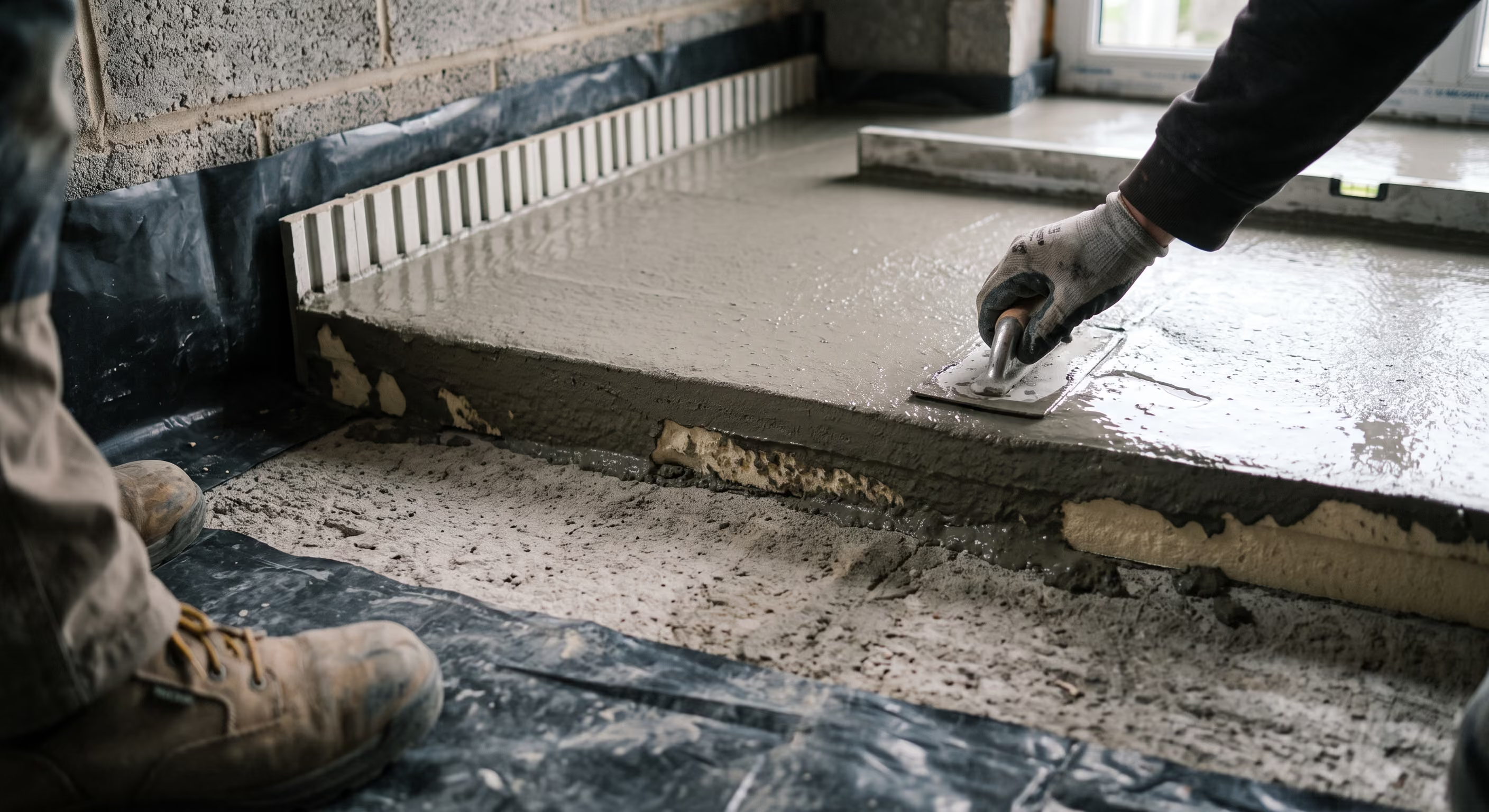
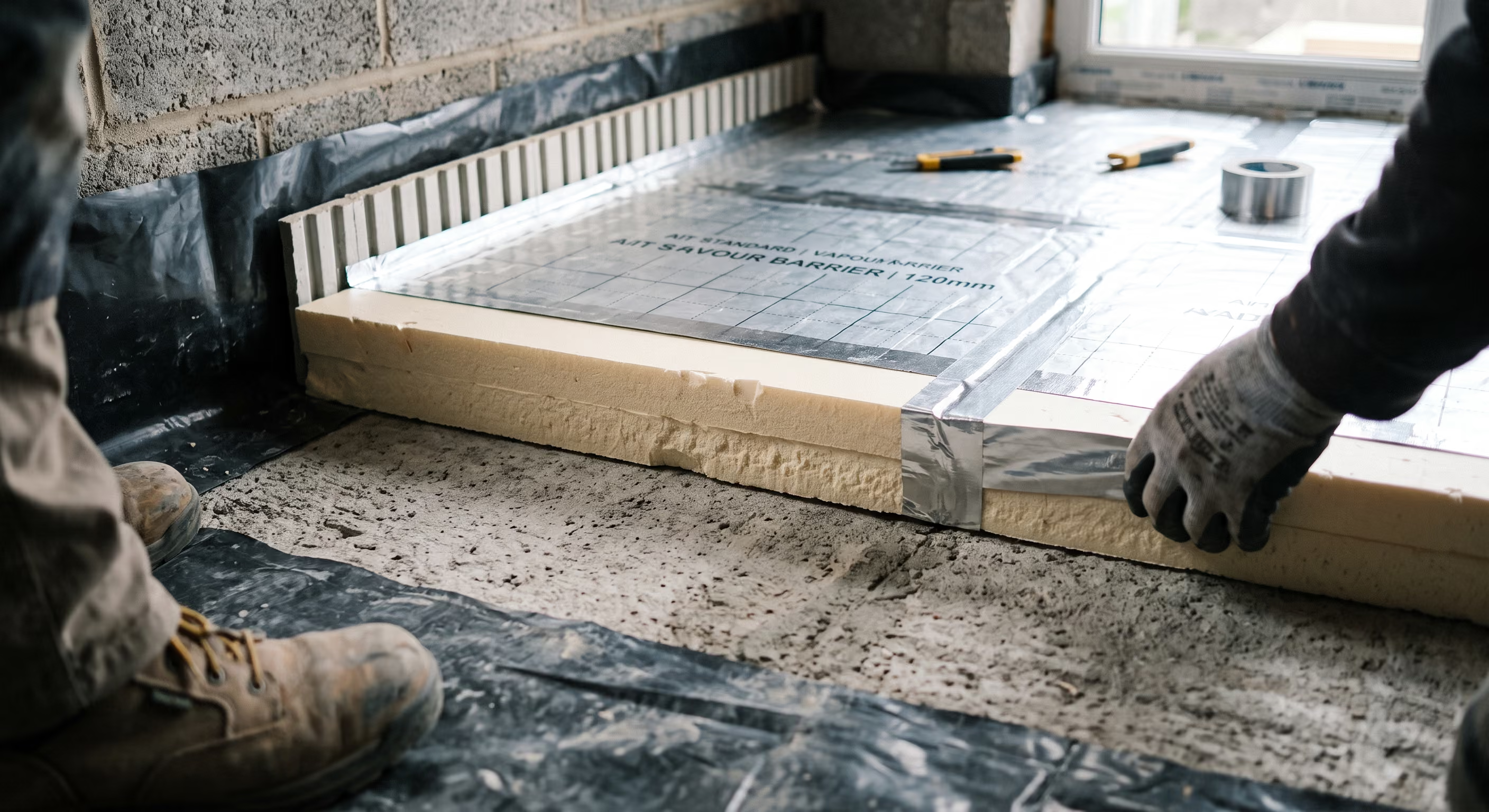
A screed is a structural layer, typically 3 to 10 cm thick, poured directly over a slab or insulation. It levels the floor, provides mechanical strength, and can encase underfloor heating pipes.
There are several types, including traditional screed, liquid screed , and anhydrite screed, each suited to different loads, thicknesses, and drying requirements. It can be laid bonded to the substrate (bonded screed) or over an insulating layer (floating screed).
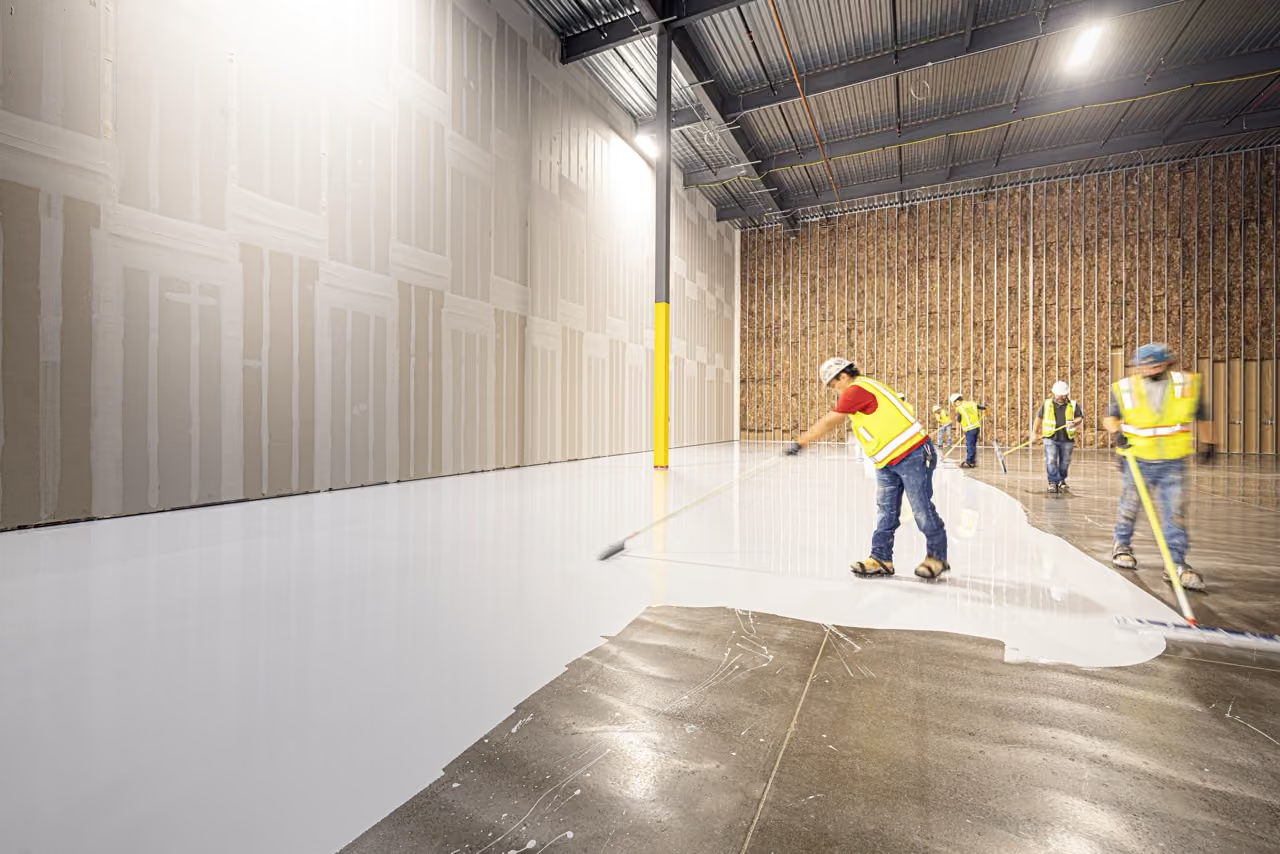
A leveling compound is a thin, cement-based coating, typically applied between 2 mm and 3 cm thick, used to smooth out minor irregularities in an existing floor before installing a final floor covering. It is not a structural layer: it cannot replace a screed, encase underfloor heating pipes, or support heavy loads.
Leveling compound is self-leveling : once poured onto the floor, its fluid consistency allows it to spread on its own before hardening within a few hours.
People often say the difference comes down to 3 cm. That is a convenient approximation, but it is misleading.
The real question is: what is this layer supposed to do?
A 3 cm layer of leveling compound on an unstable base is still just a leveling compound on an unstable base. Thickness does not give it a structural function it does not possess.
There is also a practical constraint: beyond 1 to 1.5 cm, a standard leveling compound usually needs to be replaced by a fiber-reinforced product, and the cost per square meter rises quickly. Beyond a certain level of unevenness, a lean or lightweight screed is more cost-effective than piling up layers of leveling compound.
A leveling compound only corrects the surface. It inherits the characteristics of whatever lies beneath, which limits the types of surfaces it can be applied to.
Compatible surfaces: a sound concrete slab, an existing screed in good condition, or old tiles that are well-bonded and degreased, following appropriate preparation.
Surfaces to avoid: floors that move or sound hollow, deeply cracked screeds, wooden floors that flex underfoot, damp surfaces or those subject to rising damp, and loose or detached tiles.
In all cases, using a primer suited to the surface is essential for proper adhesion. On a porous surface, it prevents the fresh product from losing water too quickly. On a non-porous surface like tile, it provides the necessary mechanical grip. Skipping this step is the most common cause of the compound peeling or detaching.
These terms are used interchangeably, and the confusion is often fueled by hardware store aisles.
Self-leveler is the common term in Dutch for a self-leveling compound. It is the same type of material, sold in bags, intended for thicknesses of a few millimeters.
Leveling mortar and leveling screed refer to thicker products capable of correcting several centimeters, which are closer to a thin screed.
The distinction that matters is not the product name, but the condition of the substrate. A bag of leveling compound bought at a store will perfectly fix a 5 mm flatness defect on a sound slab. It will never fix a floor that shifts, a 4 cm height difference, or a need for insulation. That is when a screed specialist becomes necessary, not before.
This is the situation we encounter most often in renovation: a leveling compound was used to fix something that required a screed.
The scenario is always the same. The floor has a 3 or 4 cm height difference. A screed seems heavy and takes a long time to dry. So, two or three layers of leveling compound are piled on.
The result appears a few months later: cracks following the weak points of the substrate, hollow-sounding areas, and tiles coming loose in sections. The repair then requires removing the flooring, stripping the leveling compound, and finally pouring the screed that should have been done in the first place.
The cost of a screed is known in advance. The cost of a poorly applied leveling compound is discovered later. The other pitfalls of this phase are detailed in our article on mistakes to avoid before pouring a screed.
Yes, it is actually a common combination. A new or old screed may have small surface irregularities after drying. A thin leveling compound is then applied on top, just before laying the final flooring, to achieve perfect flatness.
One condition is essential: the screed must have reached itsresidual moisture level before application. A leveling compound applied to a screed that is still damp traps that moisture and creates exactly the problem you were trying to avoid.
The reverse is never true: you should not use a leveling compound instead of a screed when the situation requires a structural layer.
Self-leveling compounds and screeds are not competitors; they are complementary. The former corrects and finishes, while the latter structures and embeds. The right diagnosis depends on the condition of the substrate, the planned floor covering, and the project's technical requirements.
At Davide Chape, we analyze every site before recommending the appropriate solution—whether traditional screed, liquid screed, or a simple finishing compound—without unnecessarily over-specifying your project. Contact us for a free quote.

Do not hesitate to contact us directly: our team is always available to assist you and provide a 100% free quote.


Your expert in screeds, thermal insulation, and acoustic floor insulation.